|
|
|
The warmth in a cinnamon roll is not heat. It is a pain signal.
Your tongue has a receptor called TRPA1, built to detect cold and tissue damage. Cinnamaldehyde activates it directly. Your brain reads the result as warmth because it has no better category for it. Capsaicin reaches the same sensation through TRPV1, the actual heat receptor. Same perceived feeling. Completely different biology.
That confusion is manageable. The sourcing one is not.
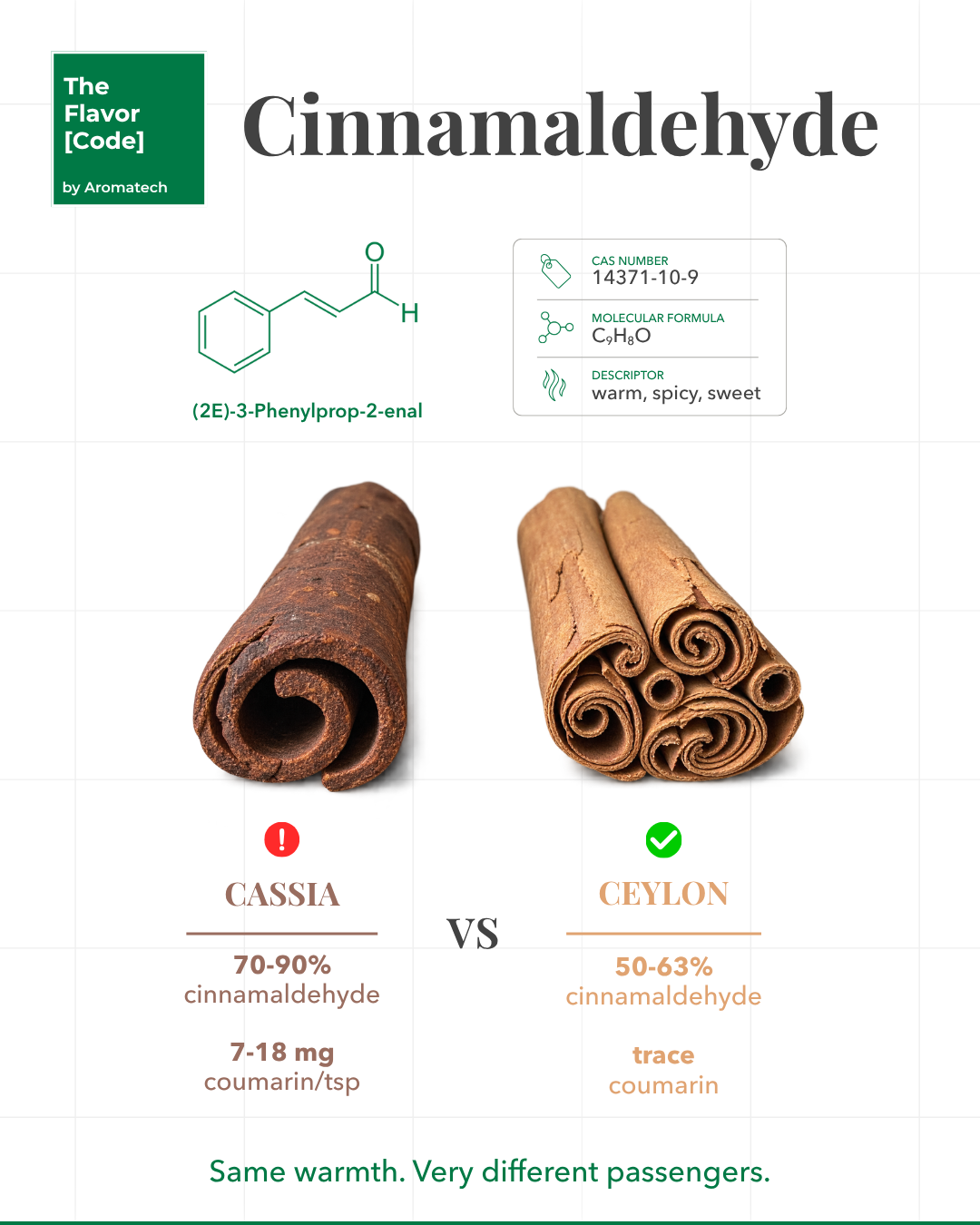
Cinnamaldehyde is the character impact compound for every cinnamon flavor on the market. But the source bark packages it with very different passengers.
🫙 Cassia bark oil is 70 to 90 percent cinnamaldehyde. The ground bark carries 7 to 18 mg coumarin per teaspoon.
🌿 Ceylon bark oil is 50 to 63 percent cinnamaldehyde. Coumarin sits near or below detection limits.
⚖️ The EU tolerable daily intake for coumarin is 0.1 mg/kg body weight. One teaspoon of cassia can exceed it for a child. The FDA has not set a comparable limit.
If your brief says “cinnamon flavor,” you are making a sourcing decision whether you write it down or not. The molecule you want is identical. The molecule you did not ask for is not.
Know what ships with your cinnamaldehyde before it ships with your product.
Full flavor catalogue and sample requests: https://aromatech-portfolio.vercel.app/index.html