|
|
|
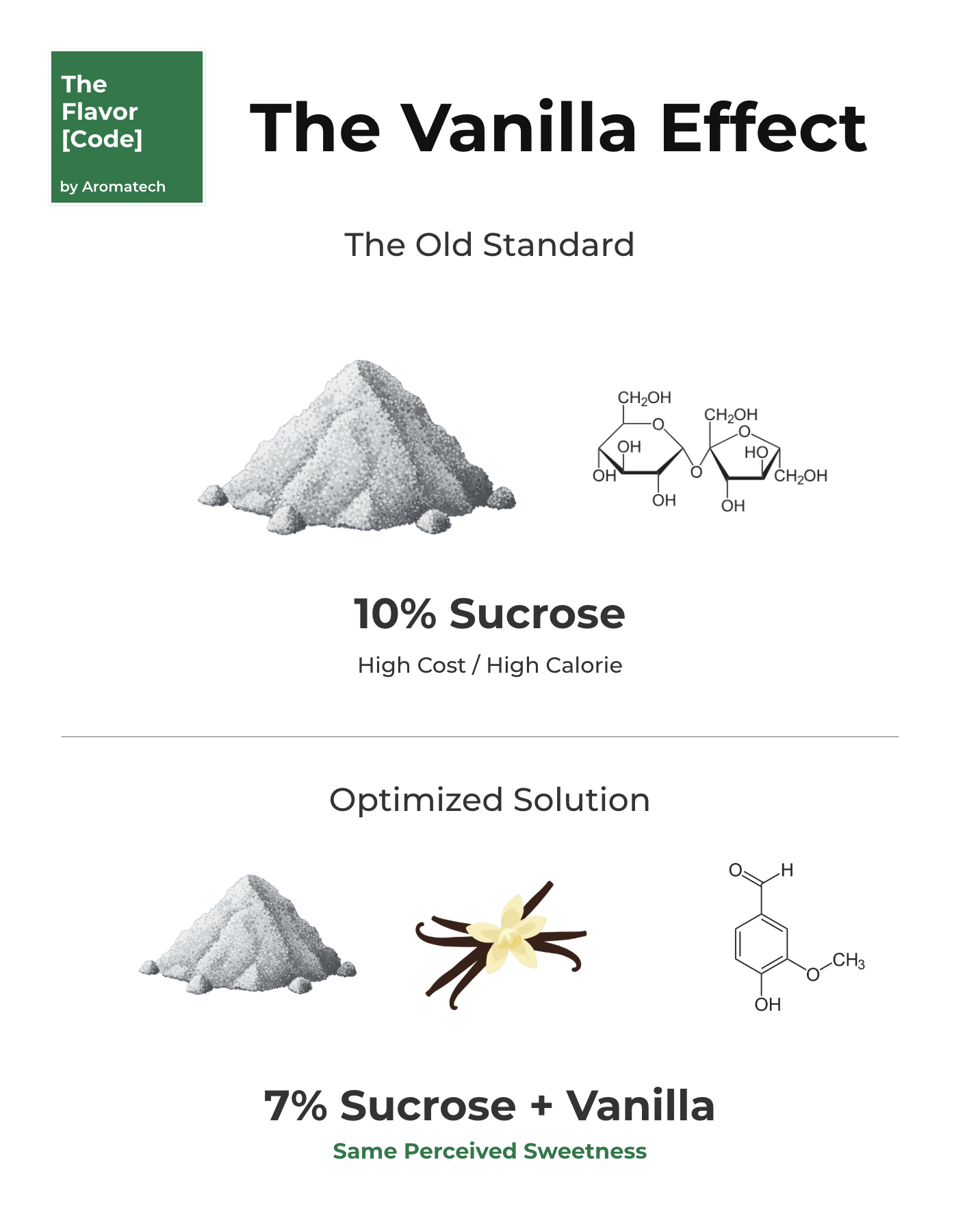
Sugar is expensive. Vanilla is a signal.
We call it “The Vanilla Effect,” but the technical term is Aroma-Induced Sweetness Enhancement (AISE).
It is one of the few times we can legally trick the brain.
Here is the neurobiology: Your brain doesn’t just taste with the tongue. It integrates signals in the Orbitofrontal Cortex. Because we have spent decades pairing vanilla with ice cream and cake, the brain creates a “Heabian pair”.
Smell vanilla, expect sugar.
The data also supports this:
Adding just 0.2% vanilla flavor allows for a ~25% reduction in sucrose without a drop in perceived sweetness.
Retronasal olfaction fills in the sensory gap.
But here is the reality of it.
You cannot just cut the sugar and add the flavor. Sugar is a bulking agent. It provides viscosity.
If you remove the sugar, the product feels “thin.” And when a product feels thin, the brain reduces the perceived flavor intensity (the viscosity-taste interaction).
So the formulation strategy is a two-step process:
Trigger the illusion: Use a congruent aroma like Vanilla (or Strawberry) to boost the sweetness signal.
Rebuild the stage: Use Digestive Resistant Dextrin or hydrocolloids to restore the mouthfeel, or the aroma will wash away.
We stop looking at ingredients as just “tastes.” We start looking at them as cognitive triggers.