|
|
|
Chocolate flavor doesn’t exist in the pod.
If you bit into a raw cacao bean, you wouldn’t taste dessert.
You’d taste bitterness, astringency, and wet vegetation.
The “chocolate” profile we know isn’t botanical. It’s microbial.
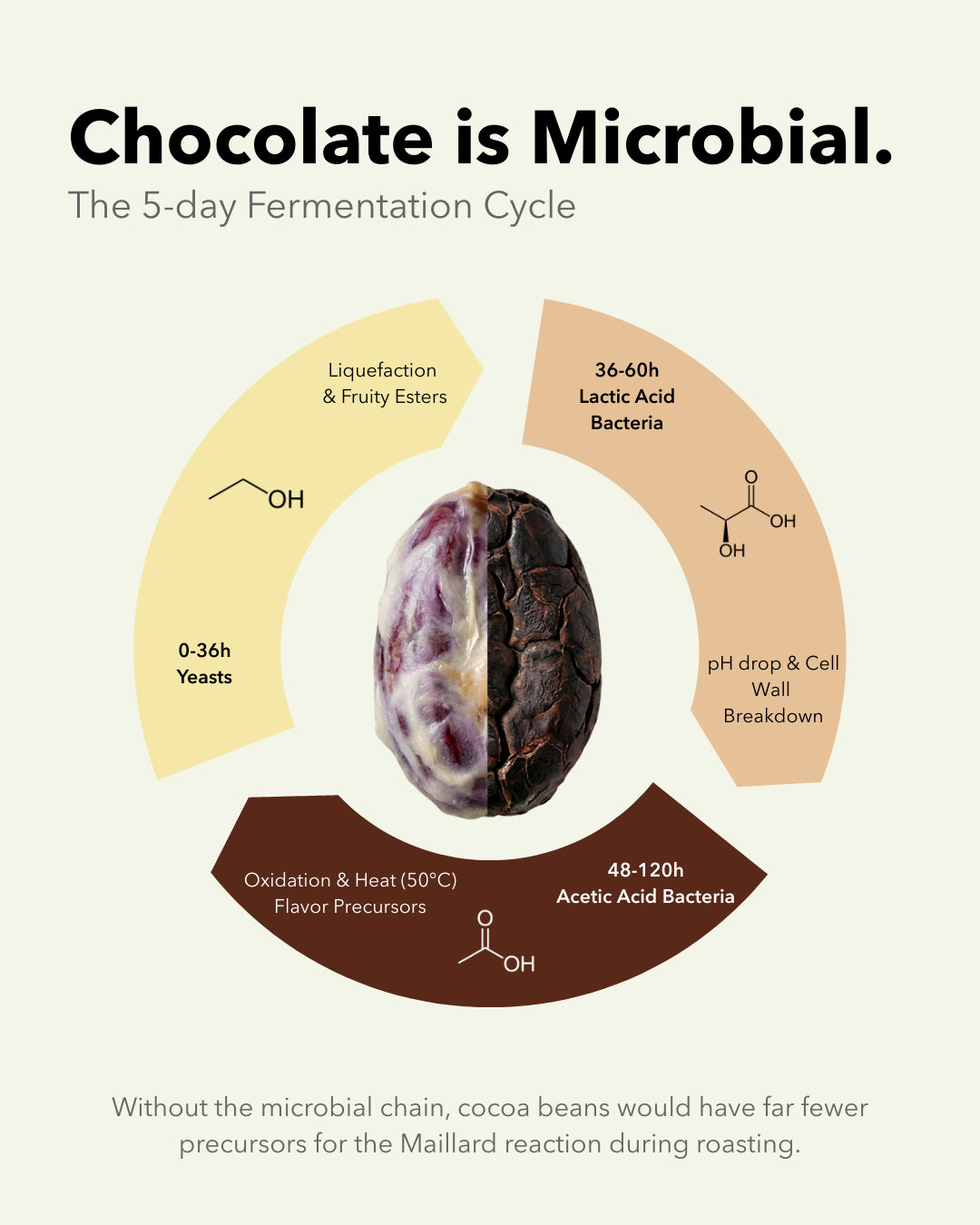
It is a 5-day biological relay race where specific microorganisms hand off the baton to create the precursors for flavor.
Here is the invisible choreography:
0-36 Hours | The Yeasts
They thrive on the sugary pulp. They liquefy the matrix and produce ethanol. The result: The development of fruity, ester-heavy volatiles that give fine chocolate its top notes.
36-60 Hours | Lactic Acid Bacteria
As oxygen flow changes, these bacteria take over. They drop the pH, creating an acidic environment. The result: This prevents spoilage and weakens the cell walls of the bean.
48-120 Hours | Acetic Acid Bacteria + Oxygen
The finale. These oxidize the ethanol into acetic acid, driving temperatures up to 50°C. The result: The cacao embryo dies. Cell walls collapse. Enzymes flood the system, breaking down proteins into free amino acids and reducing sugars.
Why does this matter to a product developer?
Because nature is inconsistent. Fermentation varies from farm to farm, harvest to harvest.
At Aromatech, we map the molecular outcome of this biological relay race. We identify the specific pyrazines, esters, and aldehydes that occur during the perfect roast.
This allows us to deliver a chocolate profile that has all the complexity of the fermentation process, but is stable, standardized, and ready for your application.
It’s not just bean to bar. It’s microbe to memory.
📩 Request a sample: https://lnkd.in/e8XVf5uq