|
|
|
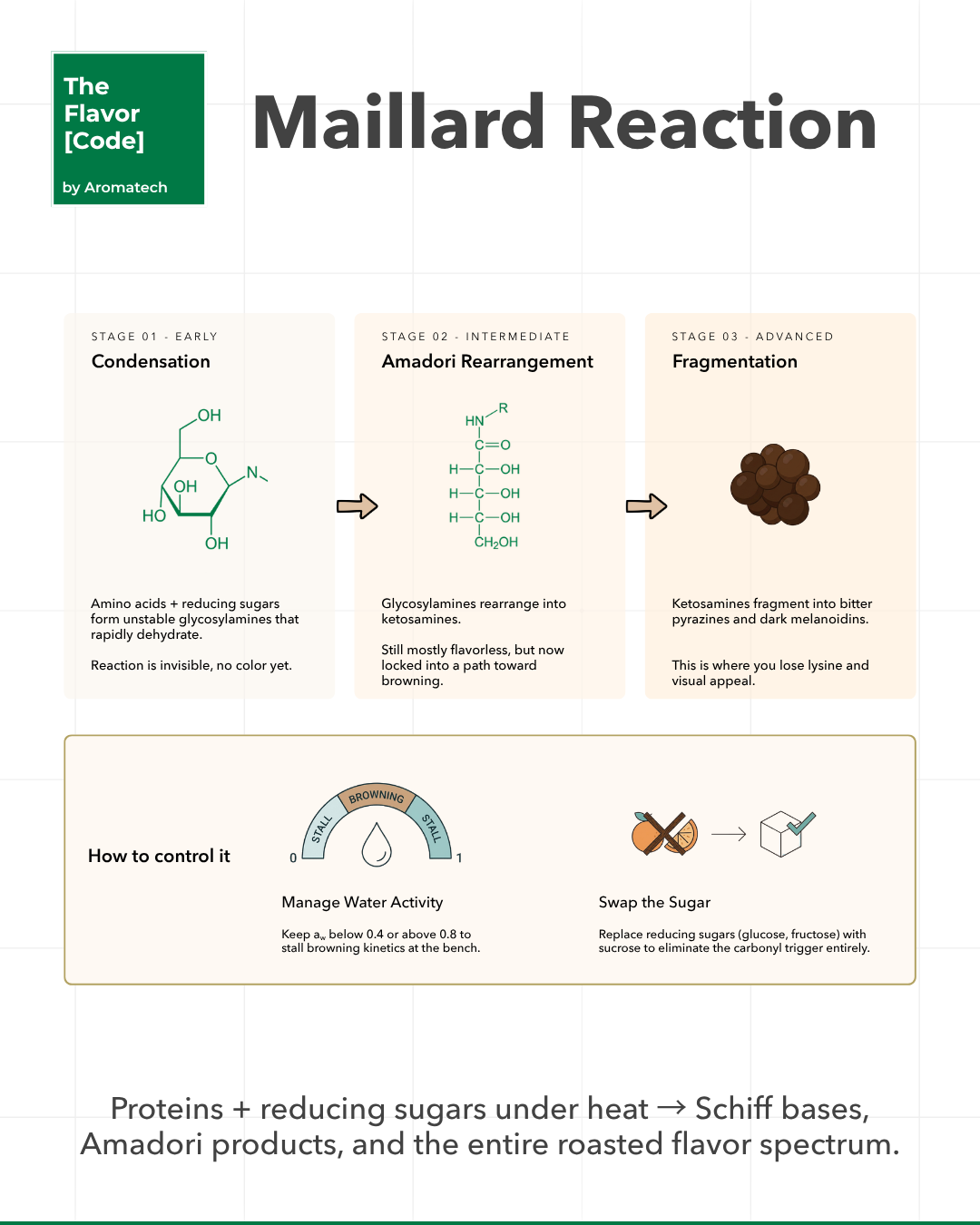
Proteins and sugars don’t just sit there.
Under heat, they go after each other, forming Schiff bases, collapsing into Amadori products, and setting off a cascade that defines nearly every roasted profile flavor houses work with.
Welcome to The Flavor Code.
Today: the Maillard reaction.
Every flavorist respects it. Few enjoy controlling it on the bench.
Push your temperature too high, or hold it too long and the profile slides fast, toasted becomes burnt, melanoidins pile up and wreck visual appeal, and you start hemorrhaging lysine before you even notice.
Here’s what’s actually happening when the reaction gets away from you:
🔥 The initial condensation forms unstable glycosylamines that dehydrate almost immediately.
📉 The Amadori rearrangement kicks in, producing ketosamines that contribute nothing to flavor.
🟤 Advanced stages rip those molecules apart, building bitter pyrazines and dark melanoidins that dominate everything else.
So how do you keep it in check?
Manage your water activity.
Keep aw below 0.4 or above 0.8 and you stall browning kinetics significantly.
And if you really need to shut it down, swap your reducing sugars like glucose for stable sucrose.