|
|
|
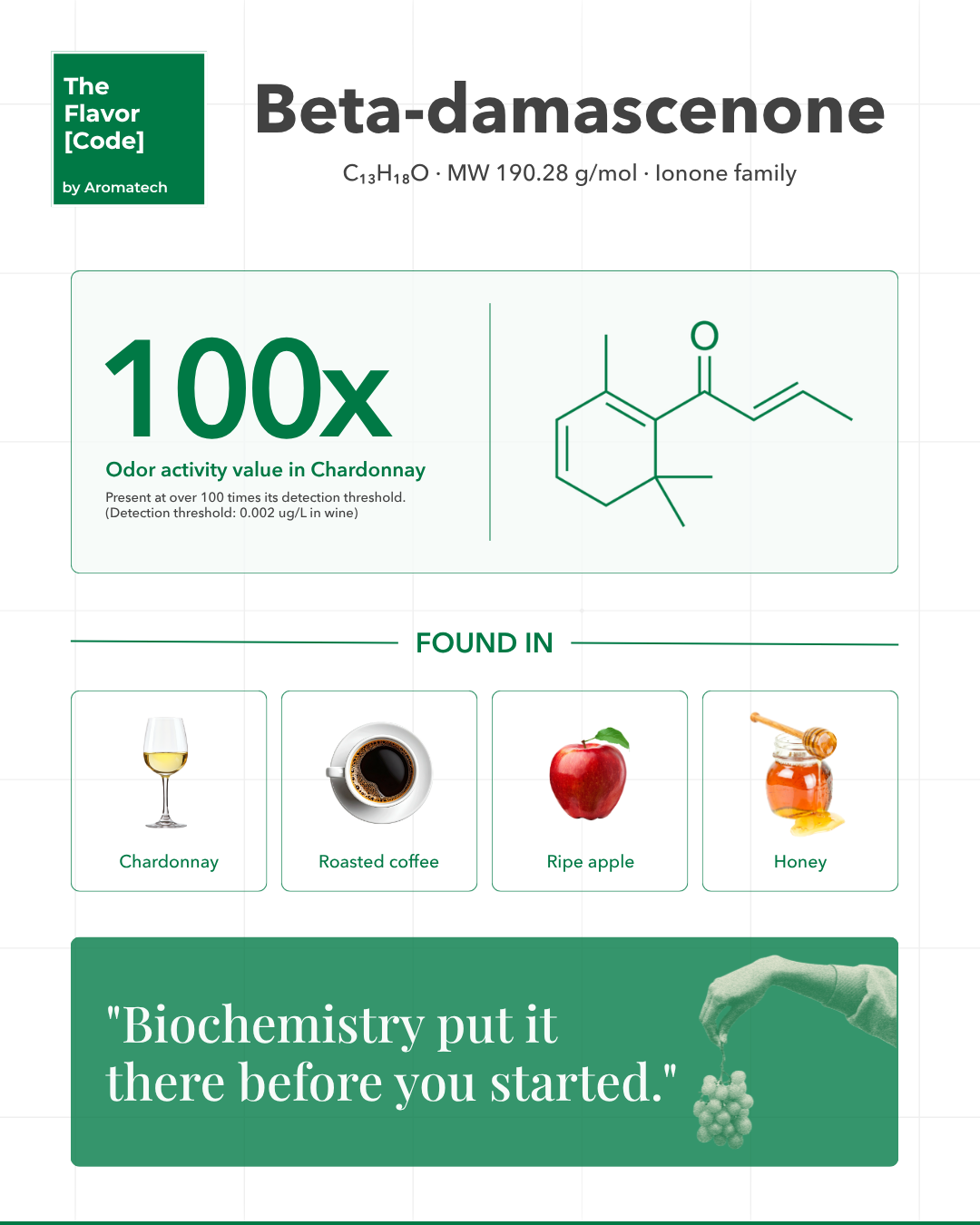
🍷 2 billionths of a gram per liter
That is the detection threshold of the compound helping shape the flavor structure of Chardonnay, roasted coffee, ripe apple, and honey.
Most flavor teams never account for it:
Beta-damascenone.
It forms before grapes are crushed, through the oxidative breakdown of carotenoids during fruit ripening and processing.
It is already present in the juice before fermentation even begins.
Winemakers did not put it there.
Biochemistry did.
Its odor activity value in wine routinely exceeds 100, meaning it can exist at more than 100 times its detection threshold while still operating at trace levels.
That warm honey, cooked apple, dried fruit, and floral lift in a finished Chardonnay?
Beta-damascenone is helping carry it through.
The same molecule appears in roasted coffee, ripe apples, and honey, always in trace amounts, always doing disproportionate structural work.
If your natural fruit flavor is not landing the way the bench sample did, check the carotenoid degradation pathway.
You may be missing the molecule before blending even starts.