|
|
|
Every flavor has a code.
And when it comes to the “brown” notes, coffee, chocolate, or roasted nuts… that code is written in Pyrazines.
These are the molecular signatures of roasting..
They are what happens when amino acids and sugars collide to create depth.
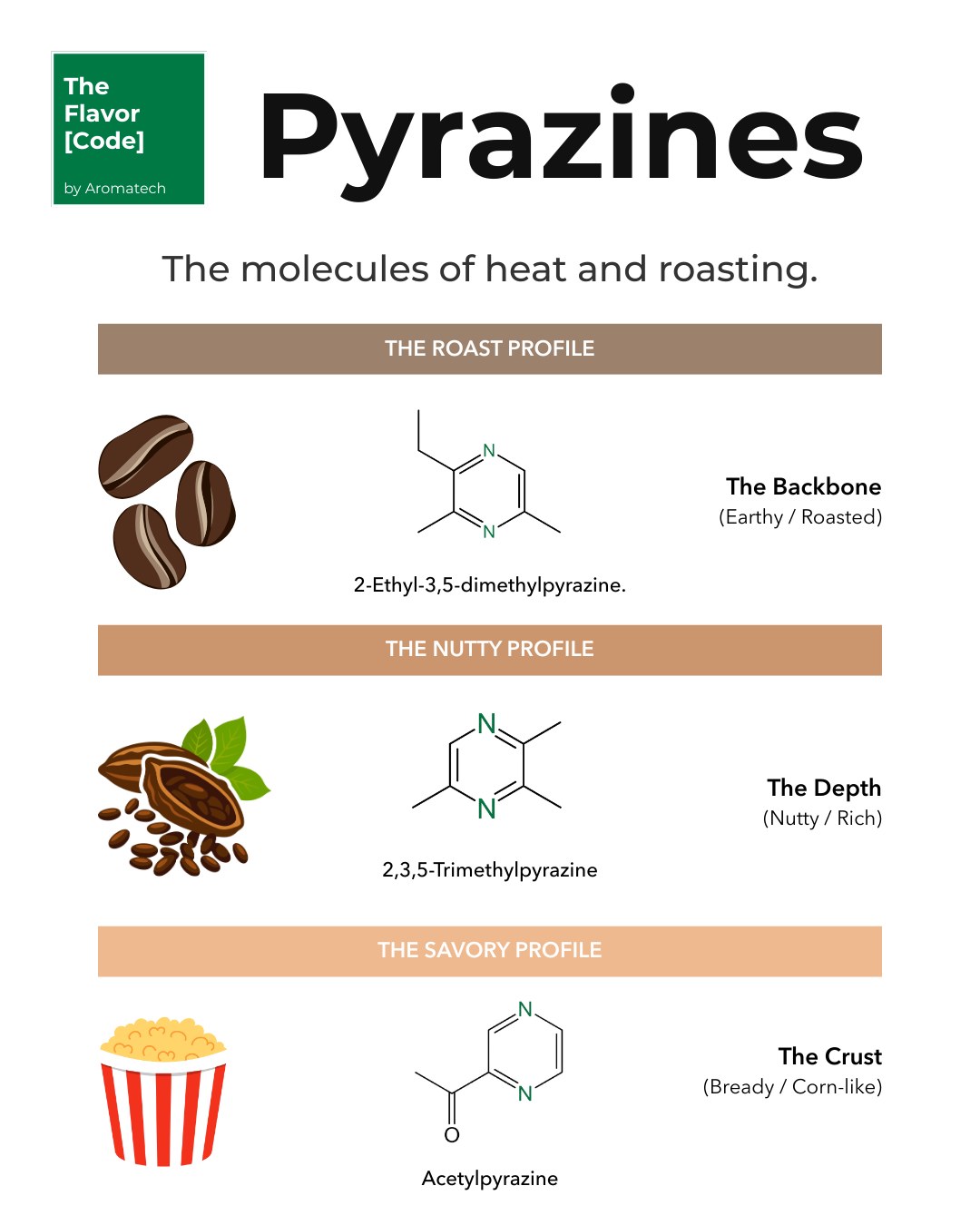
As shown in the visual, a few ppm changes the entire profile:
2-Ethyl-3,5-dimethylpyrazine: The Coffee backbone. Earthy, roasted, slightly burnt.
2,3,5-Trimethylpyrazine: The Cocoa essential. Nutty and musty.
Acetylpyrazine: The Popcorn note. Bready, crusty, and corn-like.
But here is the struggle on the bench.
Pyrazines are incredibly potent. High impact, low threshold.
If you overdose esters (fruit), the profile just gets “jammy.” If you overdose pyrazines, the profile turns chemical. Your “roasted hazelnut” suddenly tastes like a tire fire.
The trick is to balance them against the fat and sugar so they don’t spike too early in the tasting curve.
The Flavor Code is our series decoding the building blocks of taste.
Catch you in the next one!