|
|
|
Carbonara isn’t supposed to work as a flavor.
Too much fat and it gets heavy.
Too much cheese and it goes waxy.
Push the bacon and everything turns smoky-salty chaos.
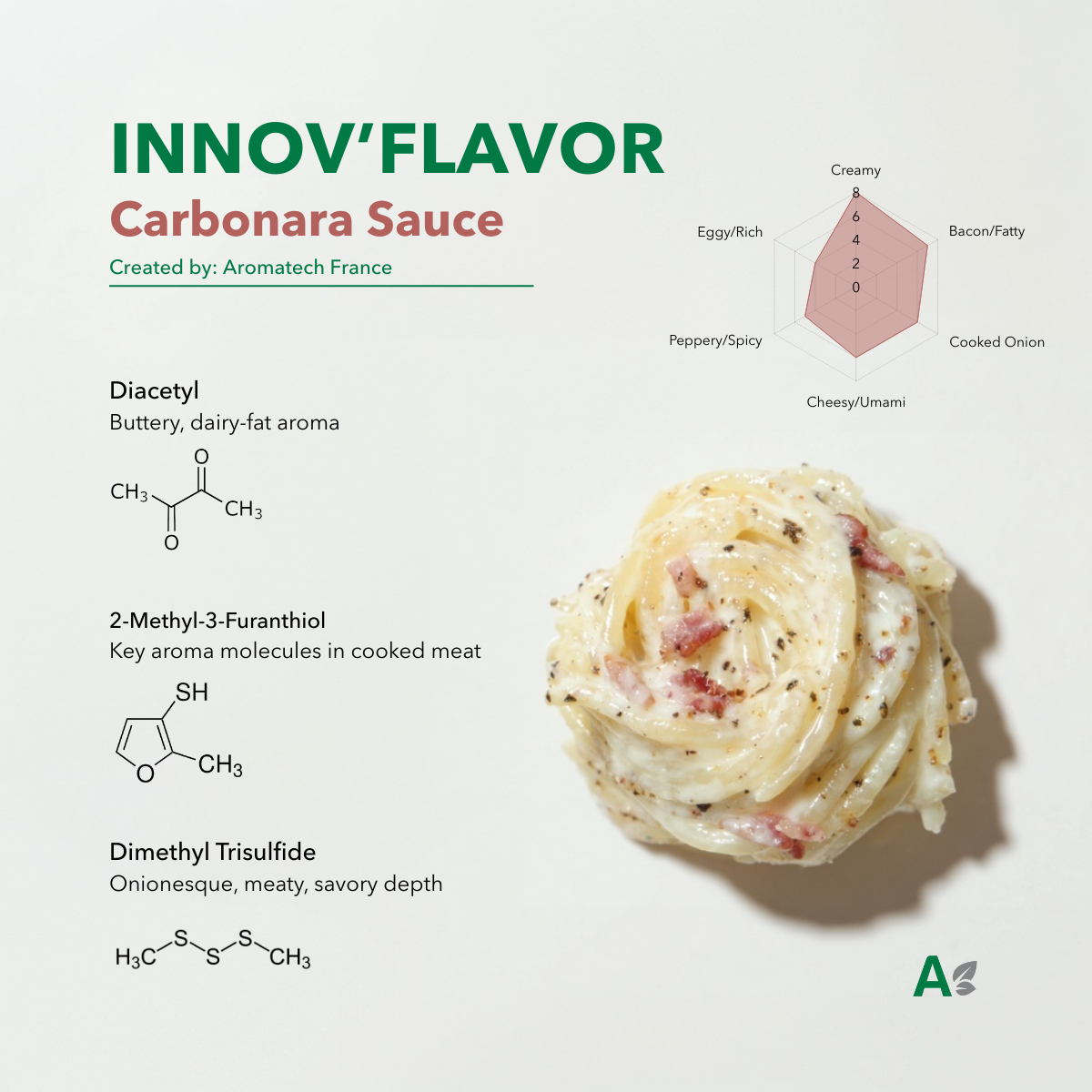
But when you break it down molecule by molecule, Carbonara becomes a surprisingly elegant profile.
In this one:
Diacetyl
The classic “buttery” molecule. Shows up in dairy, popcorn, fermented products. A tiny amount gives instant creamy richness. Too much and it tastes like someone melted a stick of butter on your tongue.
2-Methyl-3-Furanthiol (2M3F)
The king of meaty sulfur. It’s why bacon tastes like bacon instead of salted cardboard. Ridiculously potent, roasted, savory… your nose notices it even when your brain hasn’t caught up.
Dimethyl Trisulfide (DMTS)
The cooked-onion, slow-simmered, savory backbone. Smells awful in isolation, magically delicious in food.
It’s indulgence built from structure, not luck.
And that’s why this flavor lands in places you’d never expect:
not only sauces or béchamels, but savory muffins, snacking coatings, even ready meals looking for umami lift without the sodium bomb.
Creamy. Bacon. Onion. Cooked.
A Roman classic distilled into a stable, natural liquid flavor ready for formulation.