|
|
|
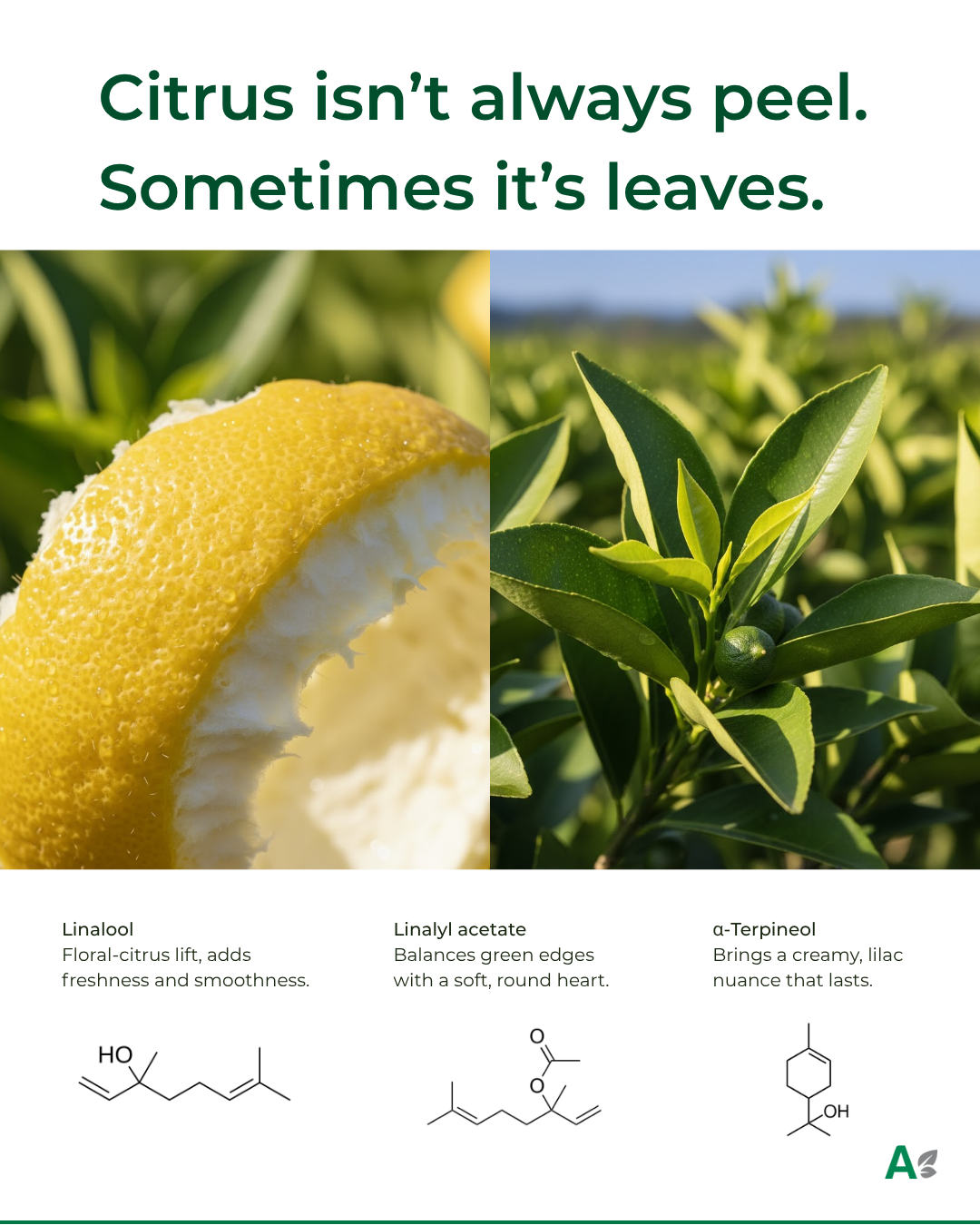
Citrus isn’t always peel.
Open a jar of “citrus” in the lab and you might be smelling leaves.
Peel ≠ leaf
Peel oils from orange and lemon skew limonene.
Leaf oils flip the profile: petitgrain (bitter-orange leaves/twigs) leans linalool, linalyl acetate, and a touch of α-terpineol. Greener, more floral, often smoother in beverages.
Species matter
Kaffir lime leaf’s lead note is citronellal, with linalool and citronellol behind it. One leaf reads bright-lime/soapy; another reads green-floral orange.
Sustainability angle
Pruning throws off a lot of citrus leaf biomass. Those “waste” leaves yield oxygenated terpene-rich oils. Usable, characterful material instead of mulch.
Labeling
In the US, “natural flavor” can come from multiple plant parts, including leaf, when used for flavor.
R&D
Leaf fractions round harsh peel top notes and add longevity in finished product.
Linalool/linalyl acetate behave differently than limonene under heat, low pH, and oxygen, useful when you’re fighting fade or soapiness.
Petitgrain can lift without pushing bitterness; kaffir leaf can add point without detergent aftertaste (in the right dose).
Fruit is the headline. Leaves can be the story.
💡 For formulation questions, contact us here
📩 For sampling requests, fill out this short form