|
|
|
Every flavor has a code.
For the creamy, rounded notes, that code is written in Lactones.
These are the heavy lifters that bridge the gap between fruit and fat.
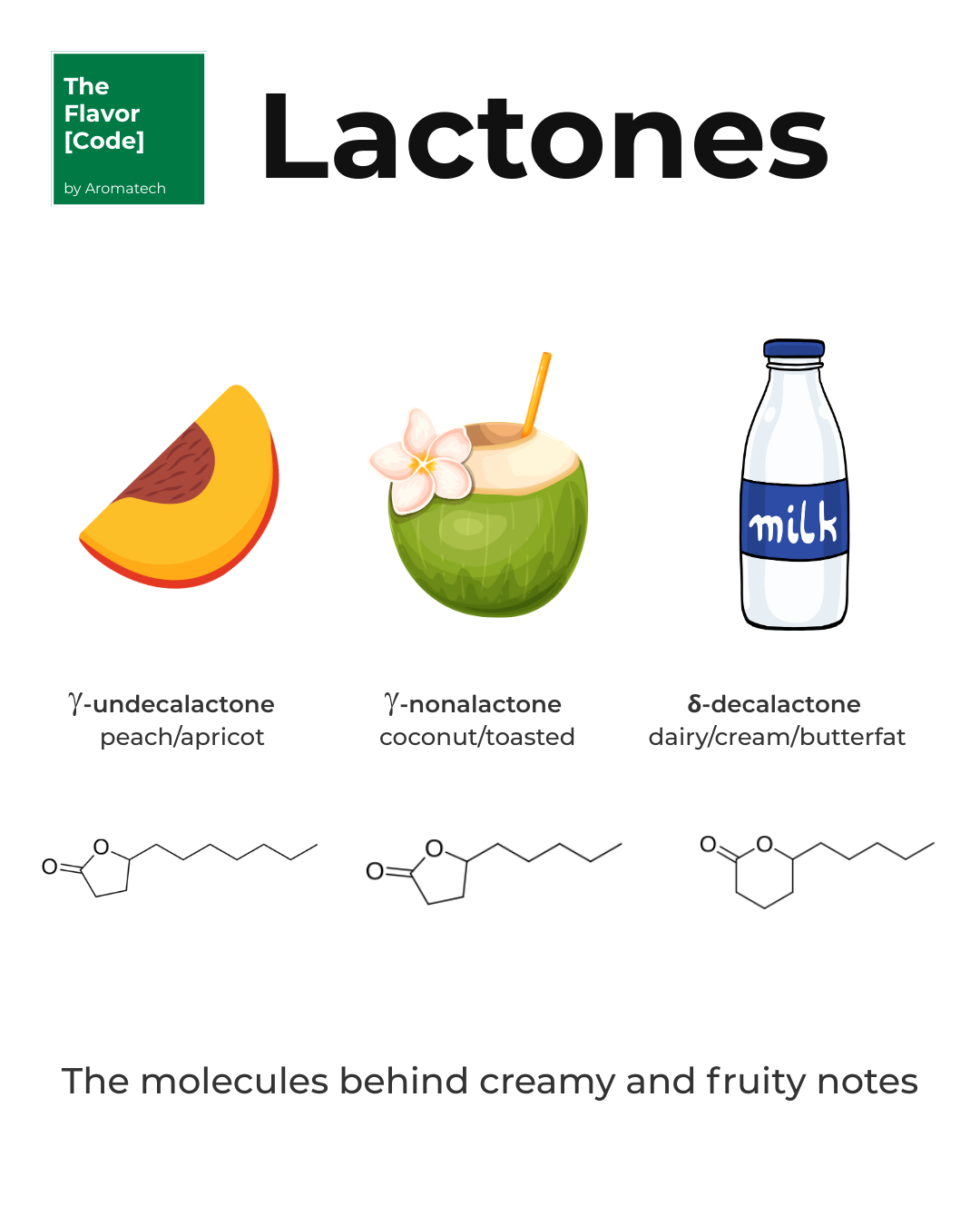
As shown in the visual:
🍑 γ-undecalactone = Peach/Apricot
🥥 γ-nonalactone = Coconut/Toasted
🥛 δ-decalactone = Dairy/Cream/Butterfat
But knowing the code is different from making it work in a formula.
Here is the reality on the bench:
They love fat. Lactones are lipophilic. In dairy or plant milks, they bloom and linger, creating that essential mouthfeel.
Acidity cuts them. While chemically stable in low pH, their creamy impact gets masked by high acidity. You often need to bridge them with Vanillin or Furaneol to keep the “roundness” perceptible.
Matrix matters. Lactones are relatively heat-stable, but they aren’t invincible. In high-protein UHT beverages, they can bind to proteins or get “scalped” by packaging, dampening their release.
The Flavor Code is our series decoding the science behind the taste. We break down the building blocks so you have more control over stability, sensory impact, and cost-in-use.