|
|
|
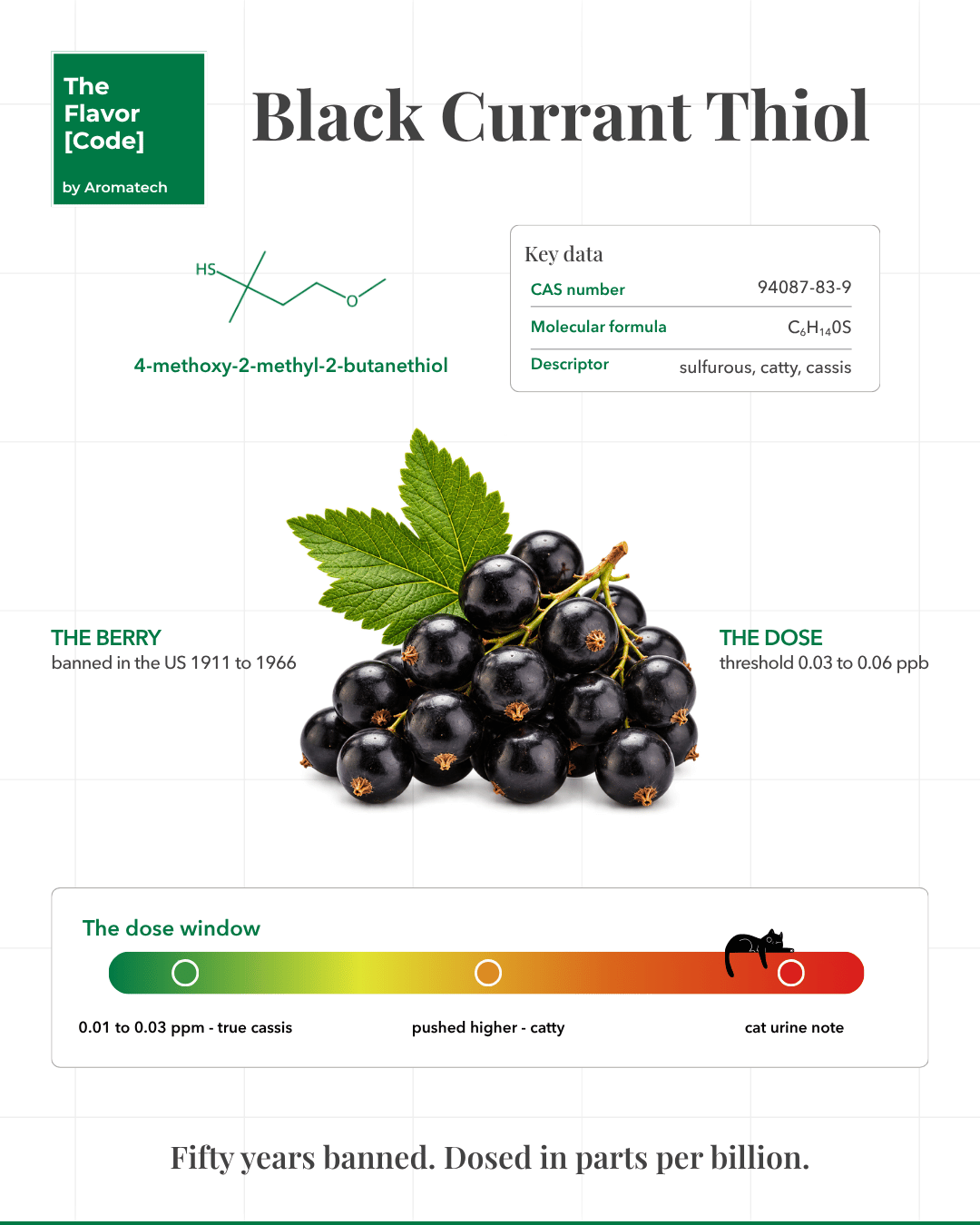
America’s 2026 flavor of the year spent half a century as contraband. Growing black currants was federally banned from 1911 to 1966 to protect pine timber, and some state bans outlived the millennium. McCormick just crowned it Flavor of the Year anyway.
The comeback runs through one molecule. 4-methoxy-2-methyl-2-butanethiol is the character-impact compound of cassis, a sulfur thiol so potent it is dosed in parts per billion.
Detection threshold sits around 0.03 to 0.06 ppb. Typical beverage dosing sits near 0.01 to 0.03 ppm. Almost nothing, doing almost everything.
Push the level and the same thiol reads catty, the note polite tasters call boxwood and everyone else calls cat urine. The dose window is the formulation.
Researchers estimate only 0.1 percent of Americans have ever tasted the fruit. Europe grows nearly the entire world crop. The US market wants the flavor and has no memory of it.
That gap is the real brief. Match true European cassis and many American panels read it as odd. Dial the thiol low over a generic berry base and you lose what makes it black currant. The decision about which target to build happens before bench work starts, because “tastes like black currant” means nothing in a country that never tasted one.
Explore our flavor catalogue: https://aromatech-portfolio.vercel.app/index.html