|
|
|
The mushroom note in miso comes from a mold.
Miso is a staple of Japanese cooking: soybeans fermented for months with salt and koji, rice or barley grown with the mold Aspergillus oryzae. The beans bring protein. The mold and the yeasts that follow it build most of the aroma.
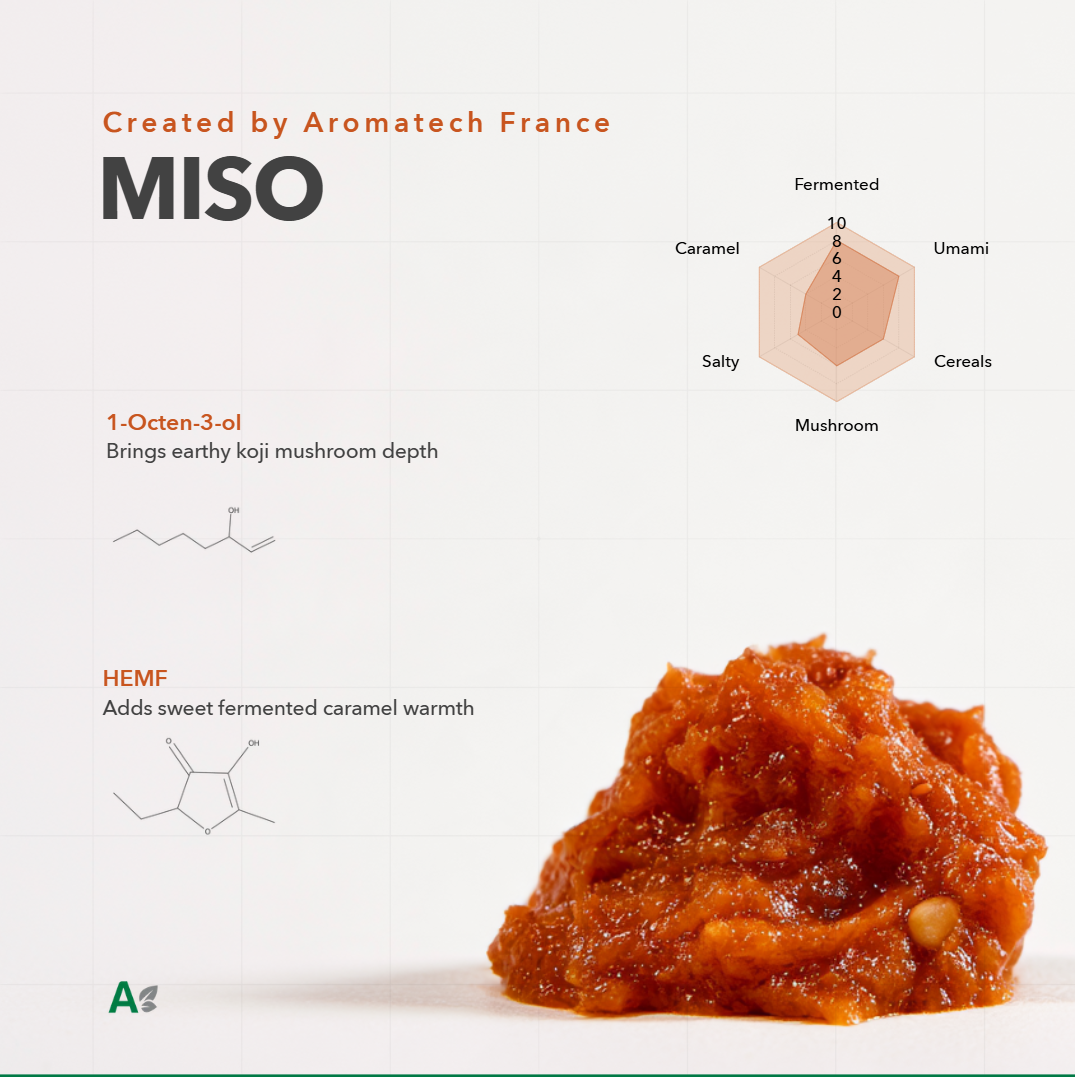
Our Miso flavor reads fermented, umami, cereal and mushroom. Two molecules carry most of that profile.
1-Octen-3-ol gives the mushroom note, and it comes straight from the koji. The mold makes it from linoleic acid, the same route mushrooms use. It is detectable around 1 ppb in water, and it is fat soluble. Milk fat in a latte holds it back. A clear broth puts it up front.
HEMF, the ethyl cousin of furaneol, brings the sweet caramel side. It is a key odorant of rice and barley misos. Salt tolerant yeasts produce it during the long fermentation. Like other furanones it is sensitive to heat, so a biscuit bake costs more of it than a soup does.
The same dose reads earthy in a broth and leans toward caramel in a sweet latte. So the balance between the two gets set per application.
Natural and in powder form, our miso flavor is built for soups, lattes, biscuits, and sauces.
Explore our flavor catalogue: https://aromatech-portfolio.vercel.app/index.html