|
|
|
You nail the bench sample on day one.
Fresh, floral, clean citrus lift, exactly what you were going for.
Then you pull the week four sample and it smells like a pine cabinet. 🌲
What happened?
You were relying on linalool in a low pH system without protecting it, and linalool does not forgive that.
It’s a fragile acyclic monoterpene alcohol.
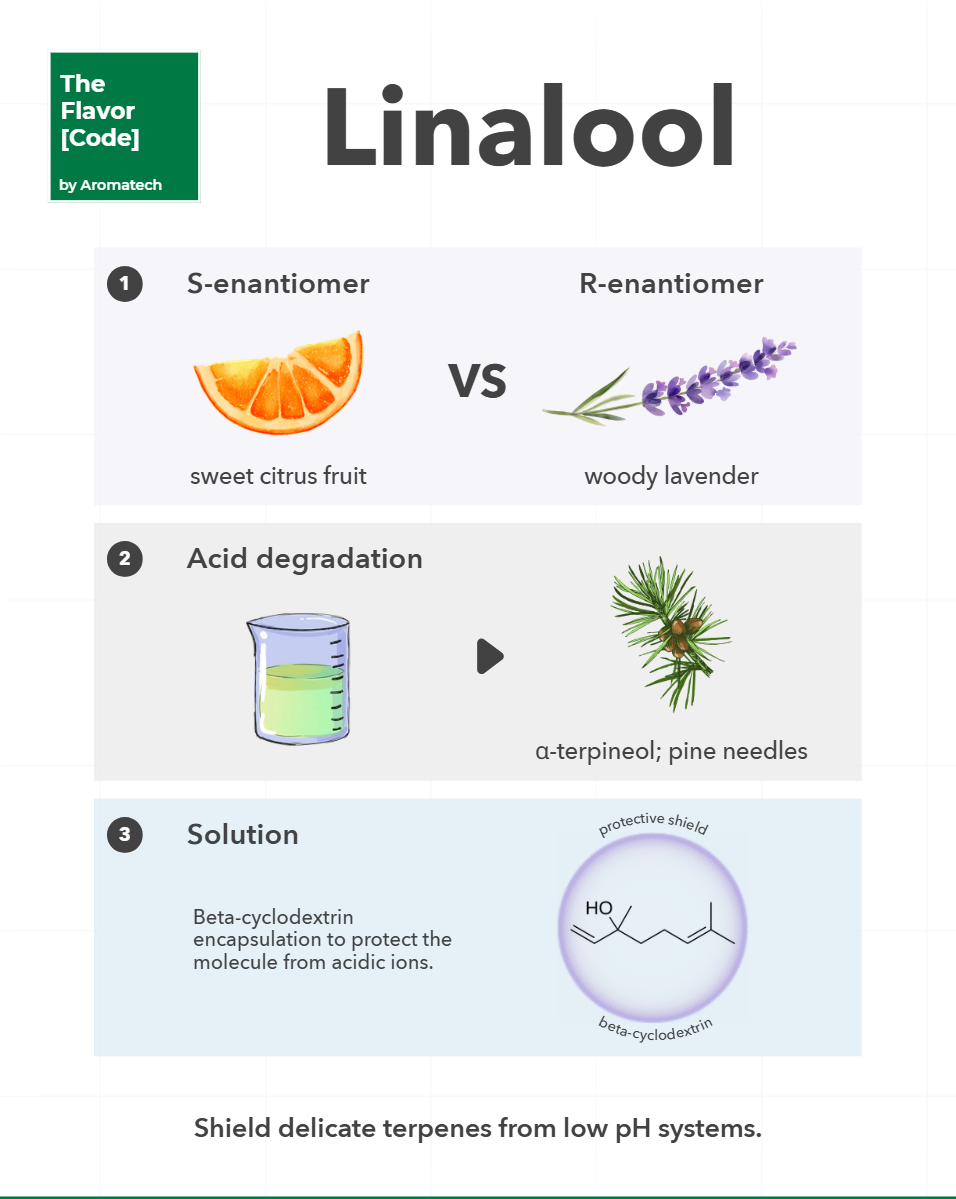
Drop it unprotected into an acidic matrix and that tertiary alcohol group starts dehydrating fast, cycling into alpha-terpineol and dragging your delicate top notes into camphor and wood territory.
Add thermal processing on top and you’ve accelerated the whole rearrangement before the product even hits the bottle.
Sourcing matters too.
The S enantiomer gives you that sweet citrus brightness ✨
The R form? Woody lavender, not what your brief called for.
The fix isn’t just “dose less.” You need to think about encapsulation, beta-cyclodextrins are your friend here, to actually shield the molecule from the acidic environment it’s sitting in.
Linalool is one of those ingredients that rewards the formulators who respect its chemistry.